Role
Head of UI/UX
Timeline
Dec – June
Tools
Figma, Git/GitHub, Mural, Adobe Creative Cloud, React, Claude
Team
Solo authorship, with direct communication with founders and marketing

Scaling the design system behind a campus startup
Understanding user experiences to design a connected campus through shared moments.


Designing a More Connected Campus Through Shared Experiences
Problem - Campus Events Are Difficult to Discover
Students constantly miss out on free food, club events, and spontaneous campus activities simply because information is scattered across group chats, social media, flyers, and word of mouth.
Finding what is happening around campus requires searching multiple platforms, causing opportunities to disappear before students even know they exist.
Research - Discovery Depends on Community
We conducted interviews, surveys, beta launches for events like the NYU film festival, and observed how students currently discover campus events and free food opportunities.
Our research revealed that discovery is highly social rather than centralized. Students primarily rely on friends, Discord servers, Instagram stories, and campus organizations instead of dedicated platforms.
Common pain points included:
Missing free food because notifications arrived too late
Difficulty finding events relevant to personal interests
No single place to explore everything happening on campus
Limited trust in event information without community validation
Ideation - Exploring Different Ways to Connect Students
We explored multiple approaches before narrowing our direction:
Campus-wide social event feed
Interactive map for nearby activities
Swipe-based event discovery inspired by social media
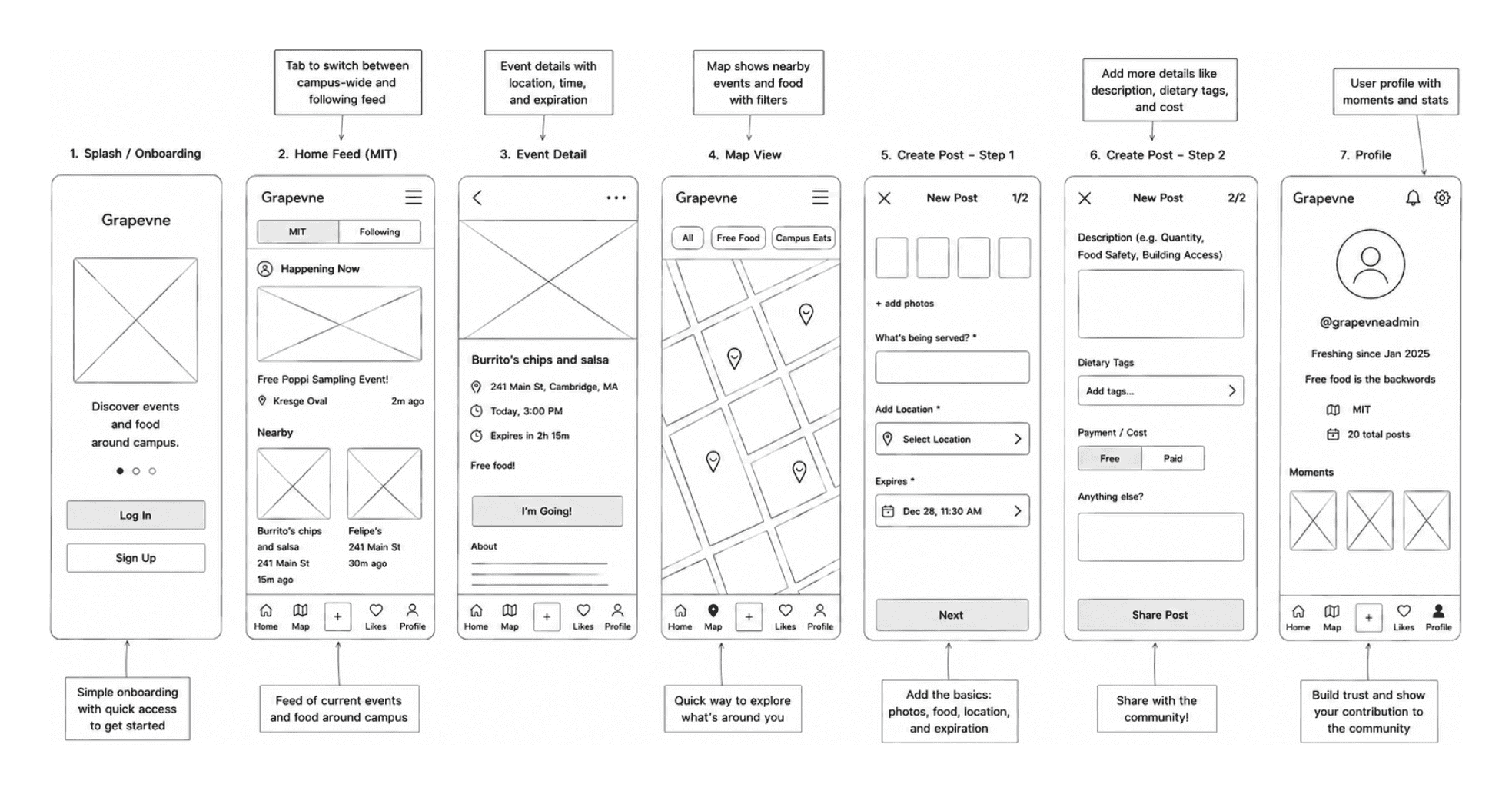
Grapevne's design direction was a campus-first social discovery platform that combines event sharing, free food notifications, and community engagement into one streamlined experience.
Design System
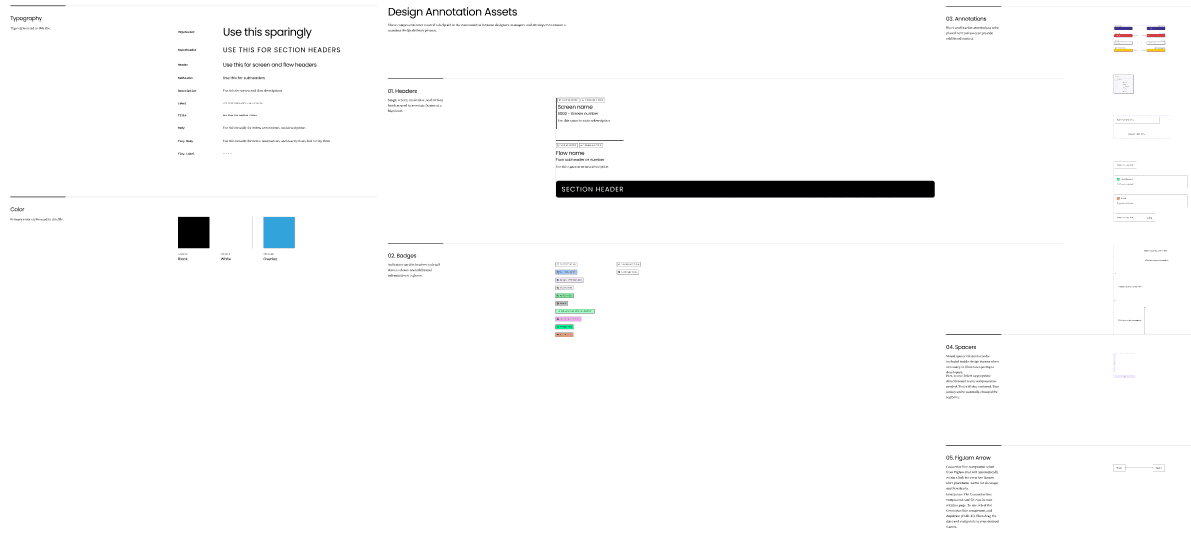
I created a design system to ensure consistency, specifying all necessary UI components, typography styles, and color codes.
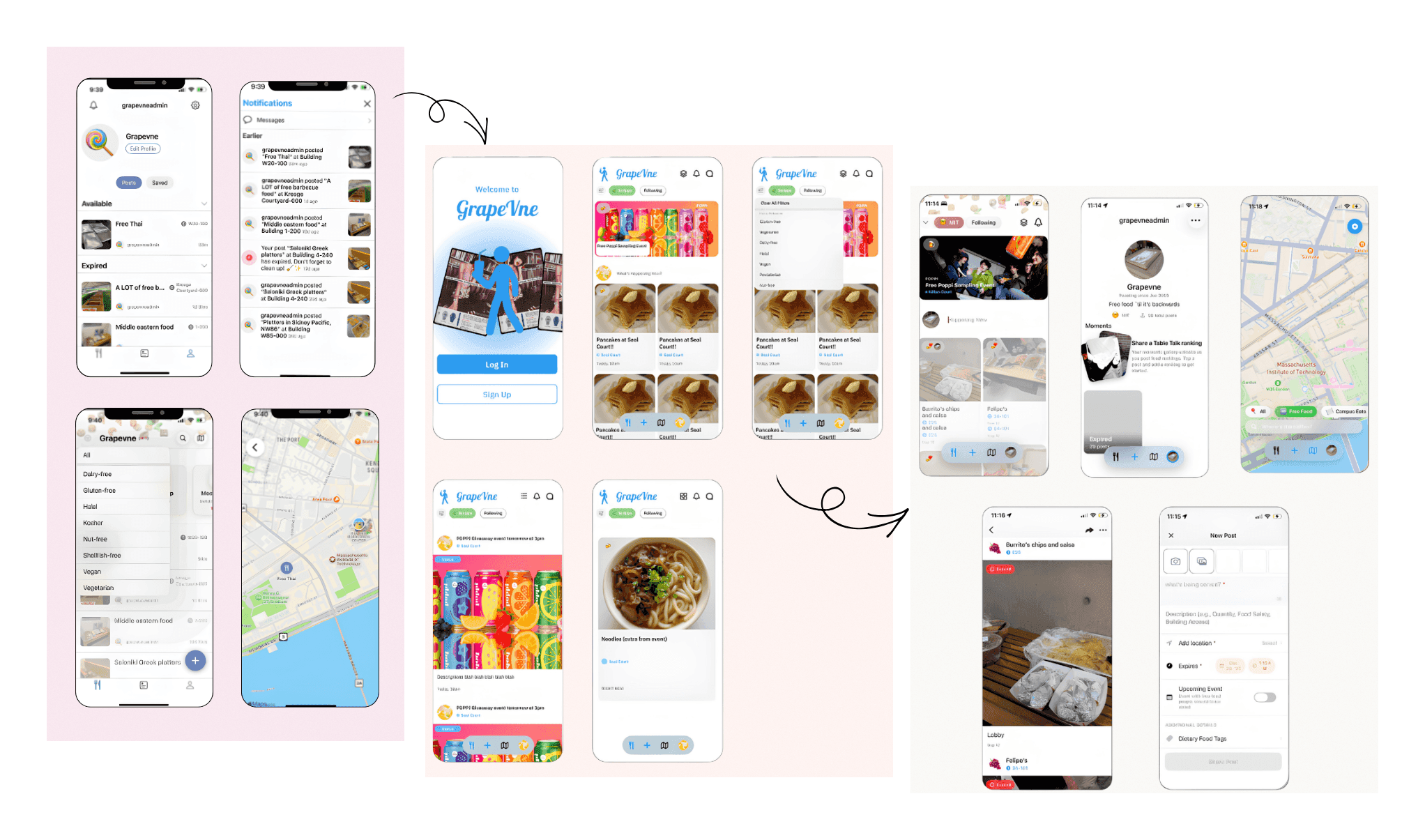
Using this, I created multiple mid-fidelity wireframe to test out the usability, clarity, and accessibility of different iterations of the app.
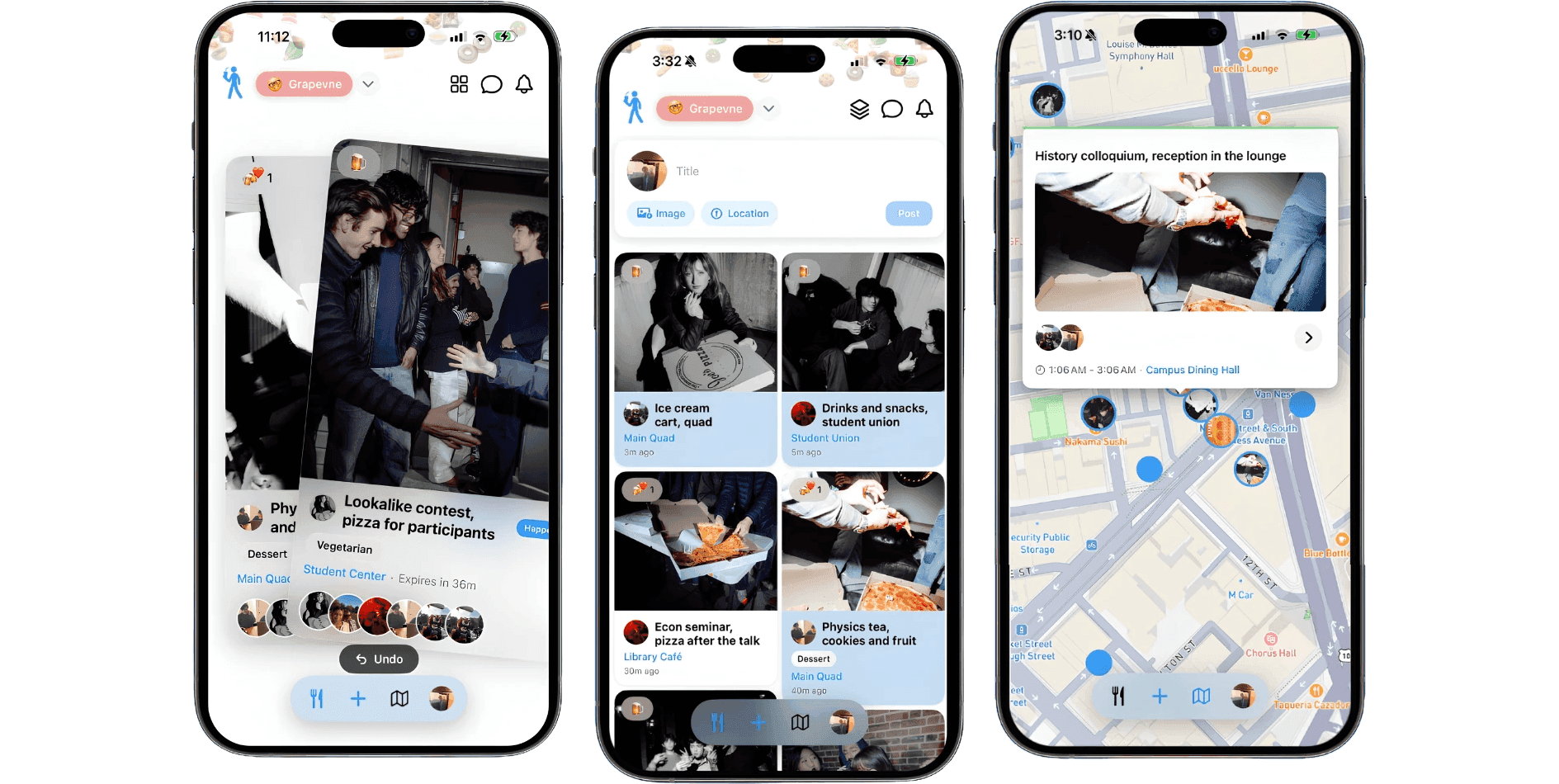
User-Centered Design - Built Around Low-Friction Participation
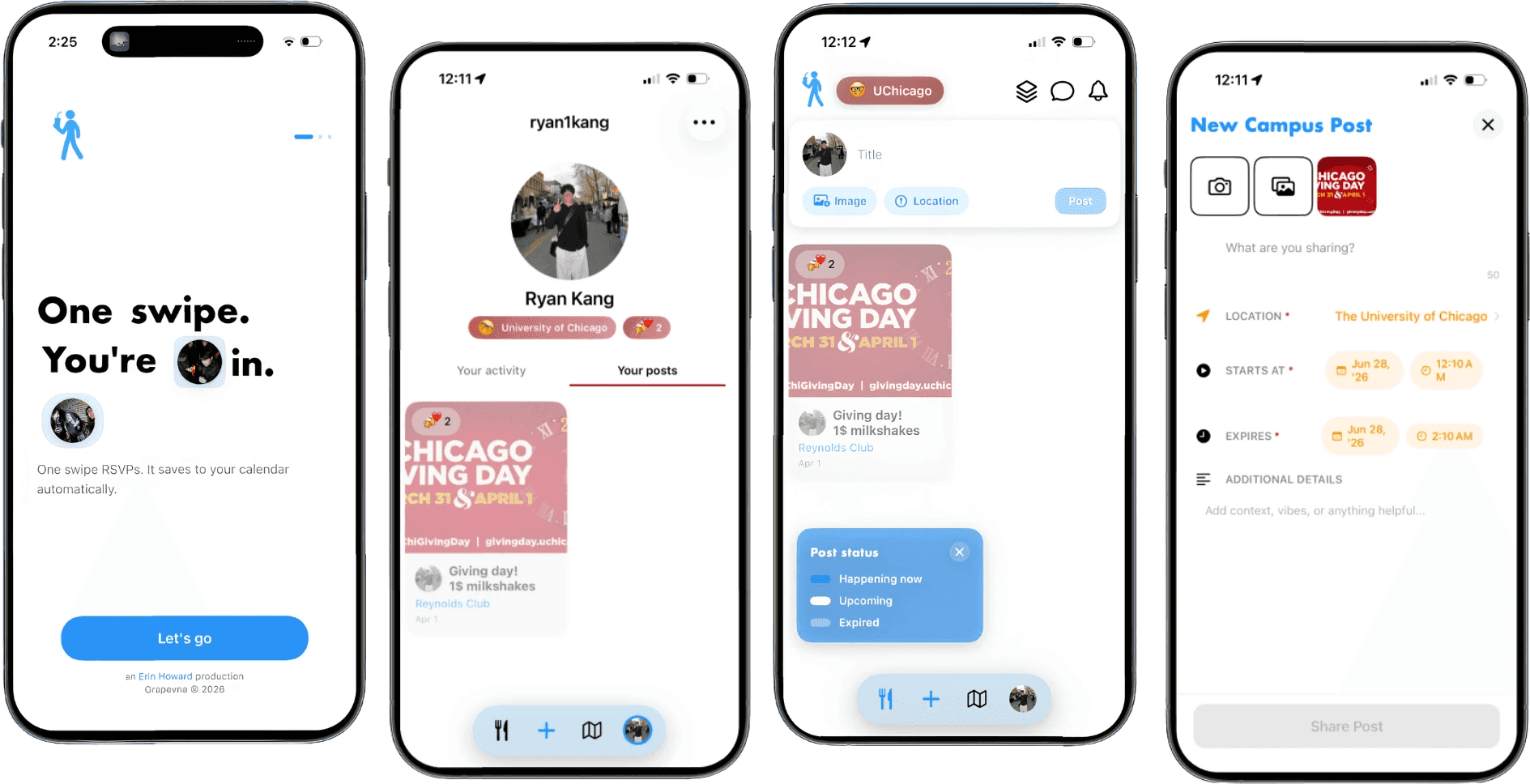
The final design is designed to minimize effort while maximizing community engagement.
The interface emphasizes quick information, fast event creation, and intuitive navigation so students can discover, share, and attend events with minimal friction, even while walking between classes.
Designing a More Connected Campus Through Shared Experiences
Problem - Campus Events Are Difficult to Discover
Students constantly miss out on free food, club events, and spontaneous campus activities simply because information is scattered across group chats, social media, flyers, and word of mouth.
Finding what is happening around campus requires searching multiple platforms, causing opportunities to disappear before students even know they exist.
Research - Discovery Depends on Community
We conducted interviews, surveys, beta launches for events like the NYU film festival, and observed how students currently discover campus events and free food opportunities.
Our research revealed that discovery is highly social rather than centralized. Students primarily rely on friends, Discord servers, Instagram stories, and campus organizations instead of dedicated platforms.
Common pain points included:
Missing free food because notifications arrived too late
Difficulty finding events relevant to personal interests
No single place to explore everything happening on campus
Limited trust in event information without community validation
Ideation - Exploring Different Ways to Connect Students
We explored multiple approaches before narrowing our direction:
Campus-wide social event feed
Interactive map for nearby activities
Swipe-based event discovery inspired by social media
Grapevne's design direction was a campus-first social discovery platform that combines event sharing, free food notifications, and community engagement into one streamlined experience.
Design System
I created a design system to ensure consistency, specifying all necessary UI components, typography styles, and color codes.
Using this, I created multiple mid-fidelity wireframe to test out the usability, clarity, and accessibility of different iterations of the app.
User-Centered Design - Built Around Low-Friction Participation
The final design is designed to minimize effort while maximizing community engagement.
The interface emphasizes quick information, fast event creation, and intuitive navigation so students can discover, share, and attend events with minimal friction, even while walking between classes.